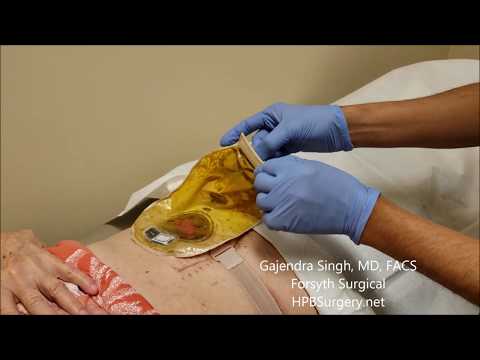
Ostomy Pouching System
An ostomate develops a new organ in the abdominal
wall (lower right or left side of the navel), called a stoma. Its primary and
sole objective is to discharge the waste material of the body (solid stool,
semi-solid feces, loose motion, or urine). Well, an ostomy occurs in the result
of a serious disease in the digestive system, that includes: large intestine,
small intestine, and bladder (colon, ileum, rectum, and bowel).
In the ostomy surgery, doctors remove the
diseases section of the colon, ileum, bowel, or bladder, and changes the path
of these tracks. The stoma performs the duty of the anus after the creation of
the opening in the opening. Hence, the circular pit needs some care and
protection. You cannot leave it all open to the germs and bacteria. Thus, a
pouching system is used to cover the opening and collect the stool or urine
(depending on the type of ostomy).
At Hospital
When an ostomy patient is at the hospital, a
nurse will empty and change the stoma bag. However, you can learn the method
that how can you replace it and drain it at home. Moreover, you will attain a
lot of knowledge at the hospital about the stoma care, use of its appliances,
the right tools for your stoma, drainage, and changing of the entire system.
As an ostomy patient, you should know all about
the pouching system and your stoma. First, you should possess all information
about your type of ostomy. It will help you in choosing the appropriate tools
for your opening. Moreover, a patient of the ostomy, either colostomy, ileostomy,
or urostomy, must know the size of the stoma. After this, you can pick and buy
the right sized appliances. If you wear a wrong stoma pouching system, it will
damage your skin, opening, and peristomal. Moreover, it will cause leakage,
blockage in internal organs and stoma, and spoil the pH of peristoma skin.

Change of Stoma Pouch
A patient of the ostomy must possess the
knowledge about the right time for the changing of its appliance and emptying
it. Well, the patient can learn this while they stay at the hospital, but once
an ostomate is at home, everything will be performed on his or her own.
An ostomate must know the need for emptying and
changing the pouch. He or she should know that the bag is half full now with
the waste container. You cannot drain or change it own your wish or
convenience. It requires the filling of the ostomy bag.
For urostomy patients, it is a hectic duty to
drain and change the ostomy bag. As urine does not have any specific time for
the discharge, the more you will take fluid and juice, the more you will pee.
Thus, it requires a high frequency of drainage and the changing of the pouch.

The case for ileostomy and colostomy is
different. Colostomy shows the bowel movement once a day. Thus, you know when
to empty the pouch. Moreover, you only need to change the pouching system after
three days. In the ileostomy, the patients discharge a semi-liquid feces. Thus,
you will empty the pouch after the feeling of bowel movement.
An ostomate must have all the accessories to
change the stoma bag that includes: wipes, adhesive remover, a new pouch,
medicated soap, disposal sack, spray, and warm water (not boiling, it should be
luke-warm). Use medicated wipes or adhesive to remove the pouch. Paste these
products slightly around the opening. Remove the used sack gently, throw it in
the toilet or dustbin. Before removing, wash your hands and use a sanitizer.
You can use a cloth to clean the peristomal instead of a wipe. Wait for the
drying of the skin and stoma. After that, pick up a new bag, paste the adhesive
and barrier around the pit, place the bag on it. Remove the lines through
fingers from the pouch.